Manhole covers in gas stations

2026-01-16 10:15

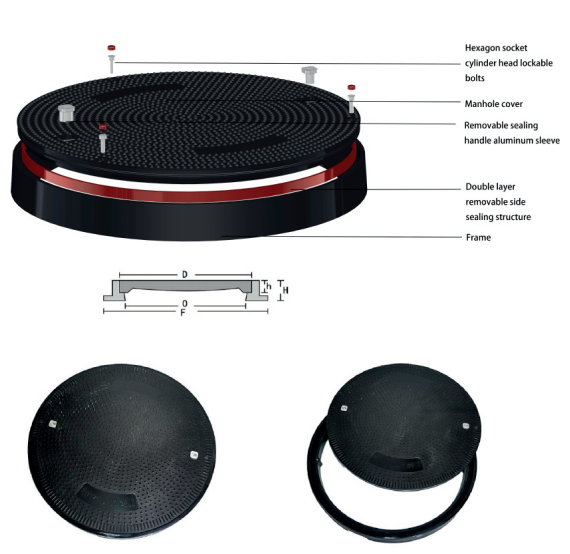
Manhole covers used in gas stations are far from ordinary accessories; they are critical components that bear the brunt of daily vehicle impacts and must maintain structural integrity under extreme pressure. Gas stations are high-traffic areas where gas trucks, transport vehicles, and passenger cars pass back and forth continuously – from the busy refueling zones to the main access roads leading to oil storage areas, manhole covers are exposed to constant rolling and impact. In such scenarios, insufficient load-bearing capacity of manhole covers can lead to serious safety hazards, such as cover deformation, collapse, or even vehicle damage, which directly disrupts the normal operation of gas stations. The D400 SMC composite manhole cover is specifically engineered to address this core demand of gas stations, fully complying with the EN124 D400 load-bearing standard – a benchmark for manhole covers used in high-traffic areas with heavy vehicles.
To understand the importance of the EN124 D400 standard for gas stations, it is essential to clarify its technical requirements: manhole covers meeting this standard must withstand a test load of 40 tons without permanent deformation or structural damage, and they can resist repeated impacts from heavy-duty vehicles. For gas stations, where 20-ton to 40-ton fuel transport trucks and delivery vehicles pass frequently, this load-bearing capacity is non-negotiable. Ordinary manhole covers simply cannot meet this strict requirement, making D400 SMC manhole covers the only reliable choice for gas stations that prioritize safety and long-term operation.
SMC manhole covers can achieve such excellent load-bearing performance thanks to their unique composite material structure. Unlike single-material manhole covers, SMC manhole covers are made of glass fiber reinforced unsaturated resin, combined with high-quality fillers and additives through a high-temperature molding process. This structure gives SMC manhole covers both high rigidity and strong toughness – the glass fiber acts as a "reinforcement framework" to enhance the overall strength, while the unsaturated resin ensures good bonding performance and impact resistance. When heavy vehicles roll over SMC manhole covers, the composite structure can evenly distribute the pressure, avoiding local stress concentration that causes damage, thus maintaining stability even under frequent heavy impacts.
In sharp contrast, ordinary concrete manhole covers, which are once widely used in non-high-traffic areas, perform poorly in gas stations due to their inherent material flaws. Concrete manhole covers have sufficient rigidity to withstand light loads, but their brittleness is a fatal weakness for gas stations. The constant rolling of vehicles at gas stations not only exerts static pressure on concrete manhole covers but also generates continuous vibration, which gradually loosens the internal aggregate structure of the concrete. Over time, small cracks will appear on the surface of concrete manhole covers, and these cracks will expand rapidly under repeated impacts, leading to chipping, edge damage, or even complete fracture. In most gas stations, concrete manhole covers need to be replaced after only two to three years of use, and in high-traffic areas such as refueling lanes, their service life may be shortened to less than one year. This frequent replacement not only increases the operational costs of gas stations but also creates safety blind spots during the replacement process.
Recycled plastic manhole covers are even less suitable for gas stations, as their load-bearing capacity is far below the requirements of gas station scenarios. Made from recycled plastic waste, these manhole covers have low structural strength and poor heat resistance – under the long-term exposure to sunlight at gas stations, the plastic material will age and become brittle, further reducing their load-bearing capacity. Even in pedestrian-only areas, recycled plastic manhole covers may deform after a period of use, let alone in gas station core areas where vehicles pass frequently. They cannot withstand the pressure of even light passenger cars, making them completely incompatible with the load-bearing demands of gas stations.
Traditional ductile iron manhole covers, which are often considered "heavy-duty" alternatives, also pale in comparison to SMC manhole covers in gas station scenarios, despite their relatively sufficient load-bearing capacity. Cast iron manhole covers are heavy, which not only increases the difficulty of installation and maintenance but also leads to higher labor and equipment costs for gas stations. Moreover, cast iron manhole covers are prone to rust and corrosion in the humid, oil-gas-rich environment of gas stations – as corrosion progresses, their structural strength will gradually decrease, and even if they initially meet the load-bearing standard, they may fail to withstand heavy vehicle impacts after a few years of use. In contrast, SMC manhole covers are lightweight (only one-third the weight of cast iron manhole covers) and corrosion-resistant, maintaining stable load-bearing performance for 20-30 years without additional maintenance.
The adaptability of SMC manhole covers to different areas of gas stations further highlights their load-bearing advantages. Gas stations have diverse functional zones with varying vehicle flow and load requirements: the main access roads bear the heaviest loads from large transport trucks, the refueling lanes face frequent rolling from passenger cars and small tankers, and the areas near oil tanks require both load-bearing capacity and safety performance. D400 SMC manhole covers can uniformly meet the load-bearing needs of all these zones, as their composite structure ensures consistent strength across the entire cover surface, without weak points that are prone to damage. Whether it is a 40-ton transport truck passing by the main road or a small refueling vehicle rolling over the refueling lane, SMC manhole covers remain as stable as Mount Tai, never compromising on safety.
It is worth emphasizing that the load-bearing performance of SMC manhole covers is not only a result of material advantages but also of scientific structural design. The contact surface between SMC manhole covers and well seats is designed with a tight fit structure, which can evenly distribute the pressure from vehicles to the entire well seat, avoiding local overload. In addition, the edge of SMC manhole covers is reinforced with additional glass fiber layers, further enhancing their impact resistance against vehicle tires. This combination of material strength and structural design makes SMC manhole covers far superior to traditional manhole covers in withstanding long-term vehicle impacts at gas stations.
To illustrate the practical value of SMC manhole covers in gas stations, we can look at a real application case: a large gas station on a highway previously used concrete manhole covers in its main access road. Due to the high volume of heavy trucks passing by, the concrete manhole covers cracked and collapsed frequently, requiring monthly maintenance and replacement. This not only cost the gas station a lot of money but also posed a safety risk to passing vehicles. After replacing all concrete manhole covers with D400 SMC manhole covers, the gas station eliminated this problem completely – even after three years of continuous use, the SMC manhole covers showed no signs of deformation or damage, and no maintenance was required. This case fully demonstrates that SMC manhole covers can effectively solve the load-bearing problems of manhole covers in gas stations, bringing long-term stability and cost savings.
Another key advantage of SMC manhole covers in terms of load-bearing is their resistance to environmental factors that affect performance. Gas stations are often exposed to extreme temperatures, rain, and oil-gas erosion, which can degrade the load-bearing capacity of traditional manhole covers. For example, concrete manhole covers absorb water in rainy weather, which reduces their strength and makes them more prone to cracking under vehicle pressure; recycled plastic manhole covers soften at high temperatures, leading to deformation and load-bearing failure. SMC manhole covers, however, are resistant to water, oil, and temperature changes, maintaining their structural strength and load-bearing performance in all weather conditions. This stability ensures that SMC manhole covers can reliably bear vehicle loads at gas stations regardless of the environment.
In summary, the D400 load-bearing capacity of SMC manhole covers makes them the perfect solution for gas stations, where manhole covers must withstand constant heavy vehicle impacts. Compared with ordinary concrete, recycled plastic, and even cast iron manhole covers, SMC manhole covers offer superior load-bearing performance, durability, and environmental adaptability. By choosing SMC manhole covers, gas stations can not only eliminate safety hazards caused by insufficient load-bearing capacity but also reduce maintenance and replacement costs, ensuring long-term, stable operation. As gas stations continue to pursue higher safety and operational efficiency standards, D400 SMC manhole covers will remain the first choice for manhole covers in gas stations, providing a solid "backbone" against vehicle crushing.
While SMC manhole covers excel in load-bearing performance for gas stations, traditional manhole covers of other materials struggle to meet the rigorous demands of such scenarios, highlighting the irreplaceable advantages of SMC manhole covers. Let’s take a closer look at the shortcomings of these traditional manhole covers in terms of load-bearing, which further confirms why SMC manhole covers are the optimal choice for gas stations.
Ordinary concrete manhole covers, as mentioned earlier, are brittle and lack toughness, which is a fatal flaw in gas stations with heavy vehicle traffic. The internal structure of concrete manhole covers is composed of cement, sand, and aggregate – while this structure provides certain rigidity, it cannot absorb the impact energy from vehicle rolling. Over time, the microcracks inside the concrete will continue to expand under repeated pressure, eventually leading to obvious cracking and chipping. What’s worse, concrete manhole covers are prone to spalling in cold weather, as water seeps into the cracks and freezes, expanding and further damaging the structure. Once a concrete manhole cover is damaged, it can no longer bear vehicle loads, and immediate replacement is necessary. For gas stations, this frequent replacement not only disrupts normal operations but also increases labor and material costs, making concrete manhole covers an uneconomical choice for high-traffic areas.
Recycled plastic manhole covers are even less competitive in terms of load-bearing capacity. Made from recycled plastic scraps, these manhole covers have low tensile strength and poor impact resistance. In gas stations, even if they are only used in non-vehicle areas, they may deform under the sun’s high temperatures, let alone in areas with vehicle traffic. The maximum load-bearing capacity of recycled plastic manhole covers is usually less than 5 tons, which is far below the D400 standard required by gas stations. This means they can only be used in pedestrian-only zones and cannot enter the core areas of gas stations, such as refueling lanes and main access roads. Their limited load-bearing capacity and poor durability make them irrelevant for gas stations that require reliable manhole covers.
Ductile iron manhole covers, which are often used in urban roads, have relatively better load-bearing capacity than concrete and recycled plastic manhole covers, but they still have obvious drawbacks in gas station scenarios. As mentioned earlier, cast iron manhole covers are heavy, which increases the difficulty of installation and maintenance. Moreover, their load-bearing capacity will decrease over time due to corrosion. In the humid, oil-gas-rich environment of gas stations, the surface of cast iron manhole covers will rust quickly, and the rust will corrode the internal structure, reducing the thickness of the cover and weakening its load-bearing capacity. After a few years of use, even cast iron manhole covers that initially meet the load-bearing standard may fail to withstand heavy vehicle impacts, leading to safety hazards. In addition, cast iron manhole covers are expensive, and their high recycling value makes them a target for theft – stolen manhole covers leave open wells, which pose a great risk to vehicles and personnel at gas stations.
In contrast, SMC manhole covers avoid all these shortcomings while maintaining excellent load-bearing performance. Their composite material structure is not only strong and impact-resistant but also corrosion-resistant and lightweight, making them perfectly suited for gas station scenarios. The EN124 D400 load-bearing standard ensures that SMC manhole covers can withstand the heaviest vehicle loads in gas stations, while their durability ensures long-term stable performance without frequent maintenance or replacement. For gas stations, choosing SMC manhole covers is not just a choice of a manhole cover, but a choice of safety, stability, and cost-effectiveness.
Furthermore, the load-bearing performance of SMC manhole covers is consistent across their entire service life. Unlike traditional manhole covers, whose load-bearing capacity degrades over time, SMC manhole covers maintain their structural strength and load-bearing capacity for 20-30 years, thanks to the stability of the SMC material. This long-term reliability is particularly important for gas stations, as it eliminates the need for regular inspections and replacements, allowing gas stations to focus on their core business. Whether it is heavy rain, extreme heat, or continuous vehicle impacts, SMC manhole covers remain stable, providing consistent load-bearing protection for gas stations.

SMC


Get the latest price? We'll respond as soon as possible(within 12 hours)