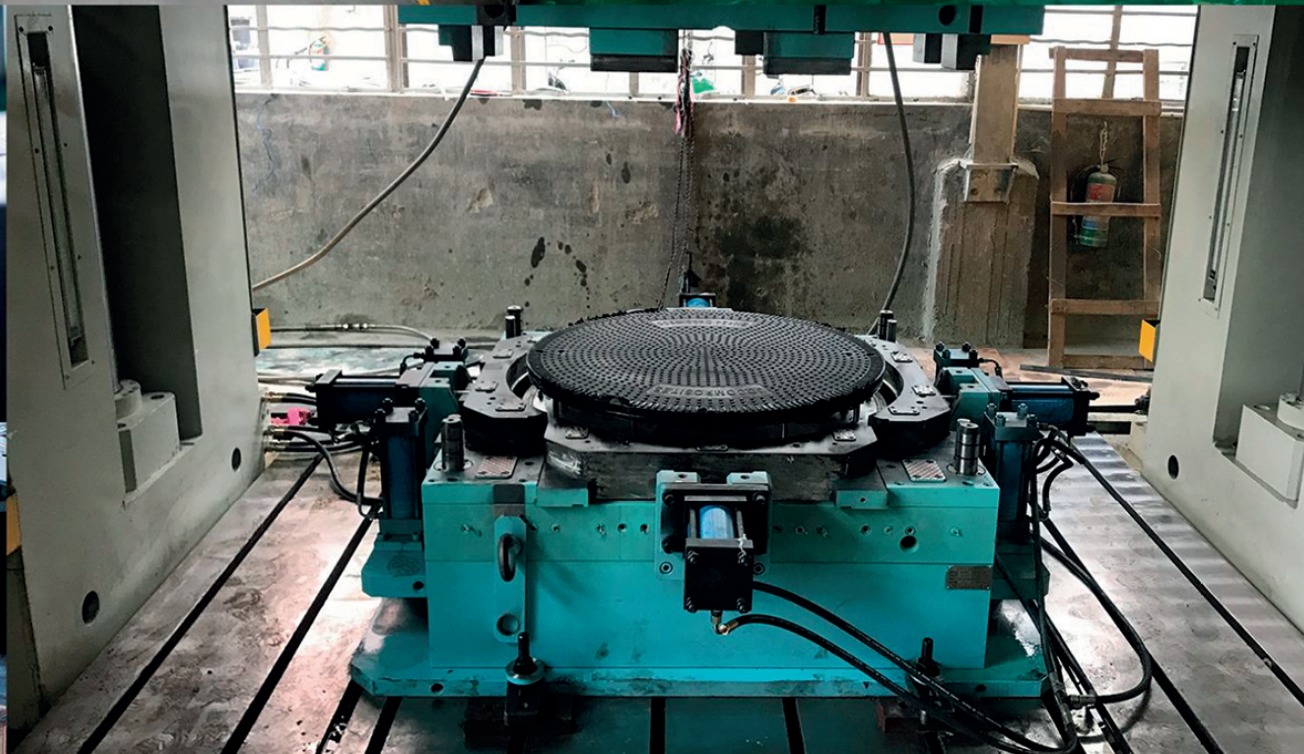
Many gas stations have a misunderstanding when purchasing: they think SMC manhole covers are not cost-effective due to their higher initial purchase price compared to cast iron and concrete manhole covers. However, when calculating the whole-life cycle cost, D400 SMC manhole covers are indeed the most cost-effective choice for gas stations. Manhole covers used in gas stations are not consumables that need replacement every three to five years; they must withstand years of vehicle rolling and environmental erosion, so durability directly determines subsequent costs. This SMC manhole cover, which strictly complies with the EN124 D400 standard, not only meets load-bearing requirements but also outperforms cast iron and concrete manhole covers in durability, with a normal service life of 20-30 years and almost no additional maintenance costs during this period – much more hassle-free than traditional manhole covers.
First, let's talk about cast iron manhole covers. This traditional type was common in gas stations in the past, but long-term use reveals hidden costs. Cast iron manhole covers are prone to rust, especially in the humid, oil-gas corrosive environment of gas stations. Every year, personnel must be arranged for derusting and anti-corrosion painting, which incurs both material and labor costs. If derusting is incomplete, rust will appear in a few years, and even rust-through and deformation may occur, requiring full replacement. Worse still, cast iron manhole covers have recycling value and are a prime target for thieves. Even with anti-theft locks, they are at risk of being pried open. Once stolen, gas stations not only have to purchase new cast iron manhole covers but also suspend operations in the corresponding area for installation, delaying business and adding significant security and maintenance costs. In contrast, SMC manhole covers, made of composite materials, are completely rust-proof, requiring no annual anti-corrosion maintenance. They also have no recycling value, featuring inherent anti-theft properties that eliminate these troubles and costs at the source.
Then there are concrete manhole covers. Though cheapest initially, they are typical of "saving money in the short term but costing more in the long run". Concrete manhole covers have sufficient rigidity but poor toughness. With numerous gas trucks and transport vehicles rolling back and forth daily at gas stations, even without heavy loads, long-term vibration and pressure will cause cracks in concrete manhole covers, which gradually expand, leading to chipping and damage. They generally need replacement every two to three years. Replacing concrete manhole covers is not just a matter of swapping out the cover; you first have to remove the damaged one, then pour and install a new one. The construction period is long, and the corresponding area has to be closed, affecting the normal operation of the gas station. Additionally, concrete manhole covers are heavy, requiring hoisting equipment for handling and installation. The labor and equipment rental costs for each replacement are considerable. Replacing just one or two annually accumulates to a total cost much higher than purchasing SMC manhole covers outright. More critically, damaged concrete manhole covers pose collapse risks – accidental vehicle damage could result in losses far exceeding the cost of the cover itself.
SMC manhole covers perfectly avoid these shortcomings of cast iron and concrete manhole covers. As manhole covers specifically designed for gas station scenarios, their cost-effectiveness lies in every detail of use. Firstly, SMC manhole covers complying with the EN124 D400 standard fully meet the load-bearing needs of gas stations with dense vehicles, stably withstanding daily gas trucks and occasional heavy-duty trucks without deformation or damage, fundamentally reducing replacement frequency. Secondly, SMC materials offer exceptional stability, resisting oil-gas corrosion, humidity, and temperature extremes. Even in harsh gas station environments, they maintain stable performance, requiring no frequent maintenance like cast iron manhole covers or worrying about damage and replacement like concrete manhole covers.
Furthermore, the lightweight advantage of SMC manhole covers saves gas stations significant hidden costs. Cast iron manhole covers often weigh tens or even hundreds of kilograms, requiring two to three people to handle – or even hoisting equipment – for initial installation, daily inspections, and maintenance, which is time-consuming and increases labor and equipment costs. In contrast, SMC manhole covers weigh only about one-third of cast iron ones, easily carried and lifted by a single person. Opening them for daily inspections of underlying pipelines and equipment improves efficiency and eliminates additional hoisting fees. For gas stations, higher operational efficiency and lower labor costs translate to substantial long-term savings.
Some may argue that spending more upfront on SMC manhole covers is uneconomical, but let's do the math clearly: an SMC manhole cover can last about 25 years with zero maintenance and replacement; a cast iron manhole cover requires maintenance every 5 years or so and replacement every 10 years. Including anti-theft and anti-corrosion costs, the total 25-year expenditure for cast iron manhole covers is two to three times that of SMC ones. Concrete manhole covers are even worse – needing replacement every 3 years, nearly 10 replacements in 25 years. Including construction and business suspension losses, their total cost is even higher. Moreover, the stability of SMC manhole covers prevents safety accidents caused by cover damage or collapse, with immeasurable potential safety costs. Thus, for gas stations, choosing SMC manhole covers is not spending more, but investing a reasonable budget for long-term convenience and savings. This is why more and more gas stations are phasing out cast iron and concrete manhole covers in favor of SMC manhole covers complying with the EN124 D400 standard.
Another notable point is that manhole covers in gas stations are distributed in different areas – some in refueling zones, some near oil tanks – and maintenance convenience is crucial. Due to their weight, even simple inspections of cast iron manhole covers require multiple personnel, delaying inspection progress. Concrete manhole covers with minor cracks have no repair value and must be replaced, causing resource waste. In contrast, SMC manhole covers are lightweight, and even occasional minor damage can be easily repaired, further extending their service life and reducing replacement costs.
From procurement and installation to daily use and long-term maintenance, SMC manhole covers help gas stations control costs at every stage. Compared to cast iron manhole covers (high maintenance, high risk) and concrete manhole covers (high replacement rate, high hidden costs), SMC manhole covers complying with the EN124 D400 standard are undoubtedly the optimal cost-effective solution for gas stations. They eliminate the trade-off between initial and long-term costs, meeting gas stations’ core manhole cover needs for load-bearing and safety while minimizing whole-life cycle expenses, truly achieving "one-time investment, long-term benefits". For gas stations pursuing efficient, low-cost operations, SMC manhole covers are the ideal alternative to traditional cast iron and concrete manhole covers – the core reason for their growing popularity in gas station scenarios.